What Is Deep Manifold?

Chinses Edition: 什么是深度流形?
Deep Manifold is not a new branch of mathematics. It is a framework that reveals the mathematics of neural networks, including their geometry, equations, training dynamics, and inference computation.
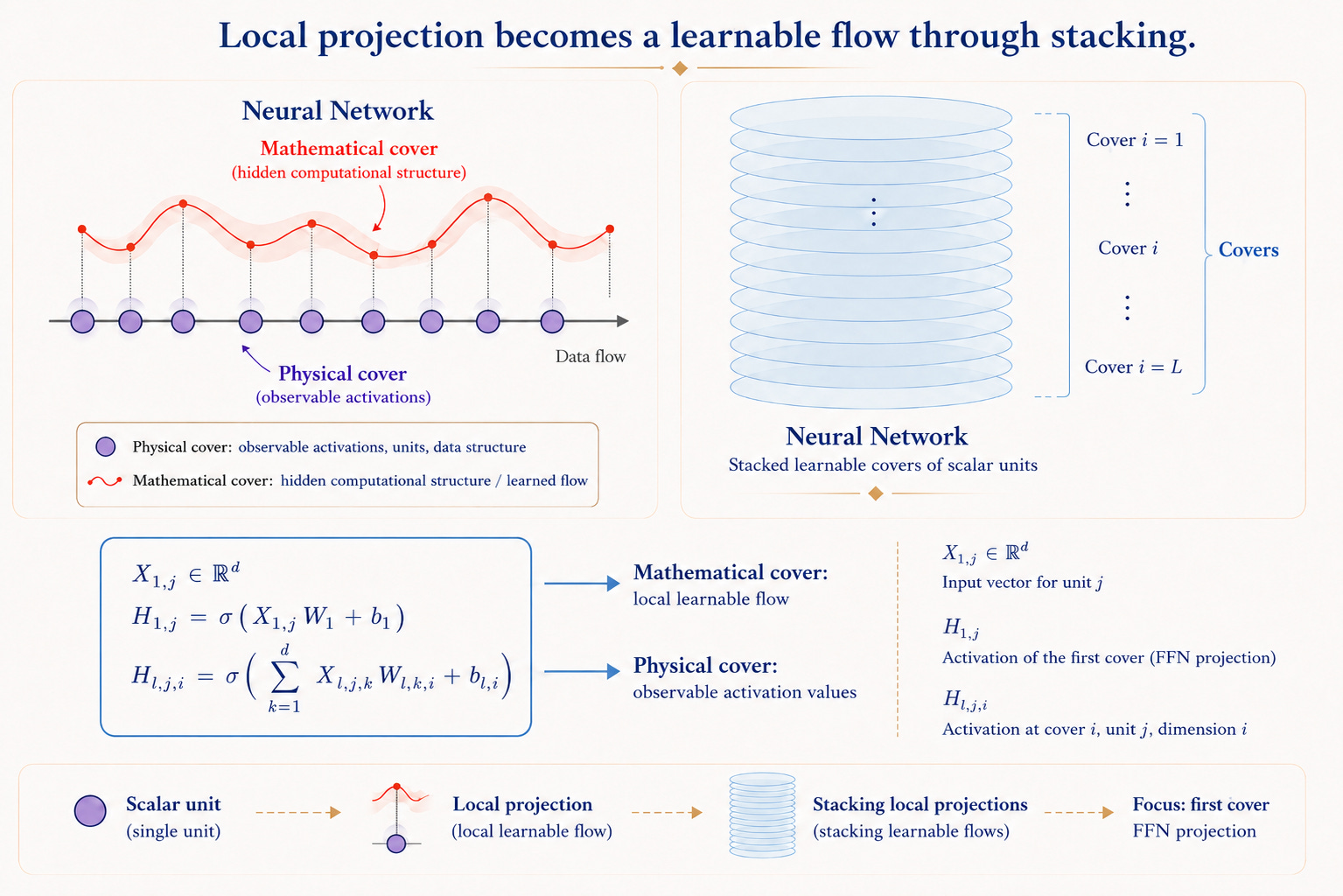
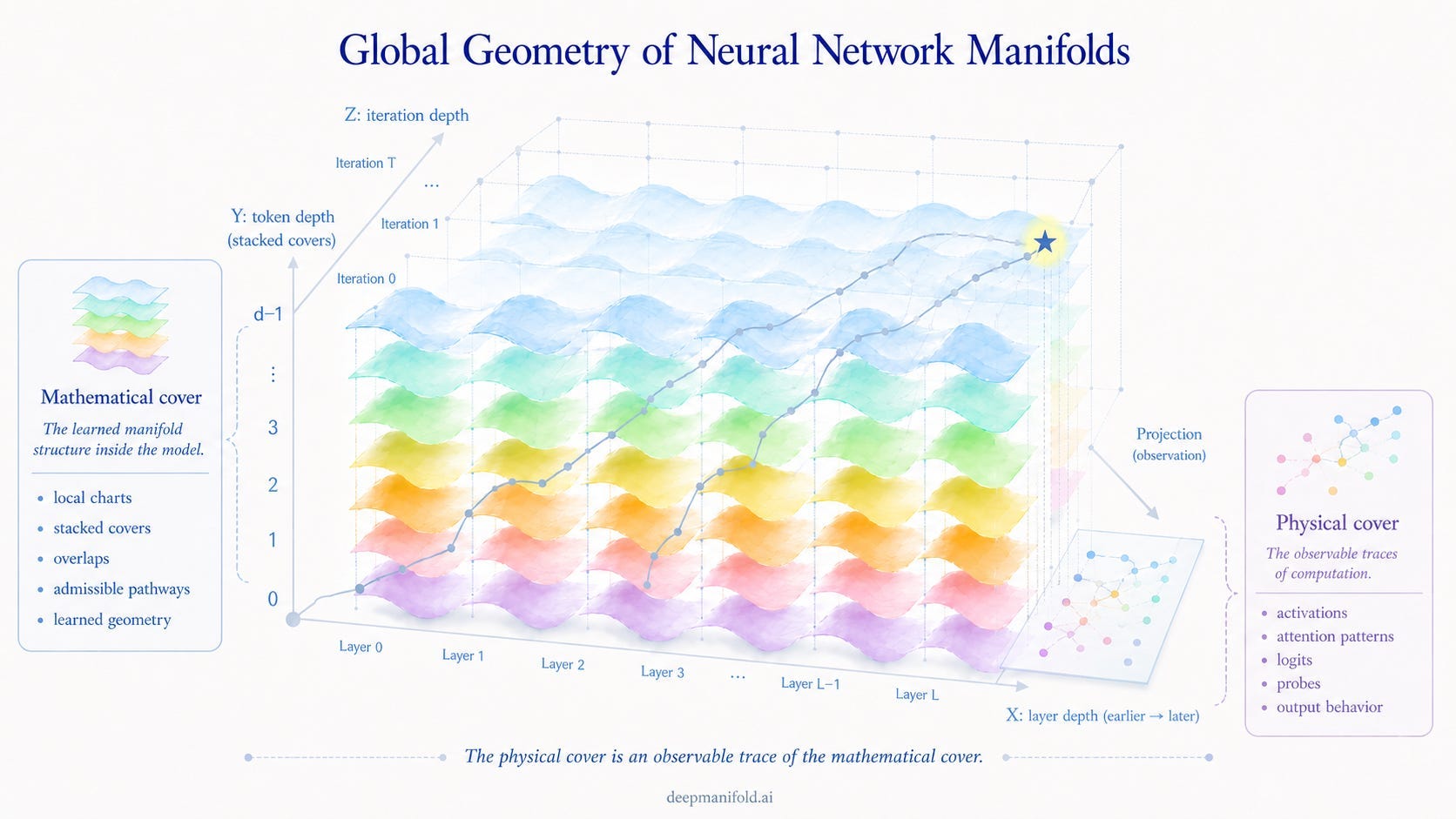
Neural Network Geometry: The Piecewise Stacked Manifold views a neural network as a learnable numerical system built from stacked, connected piecewise manifolds. Mathematical covers reside at the level of individual weights, while activations form the physical covers generated by data.
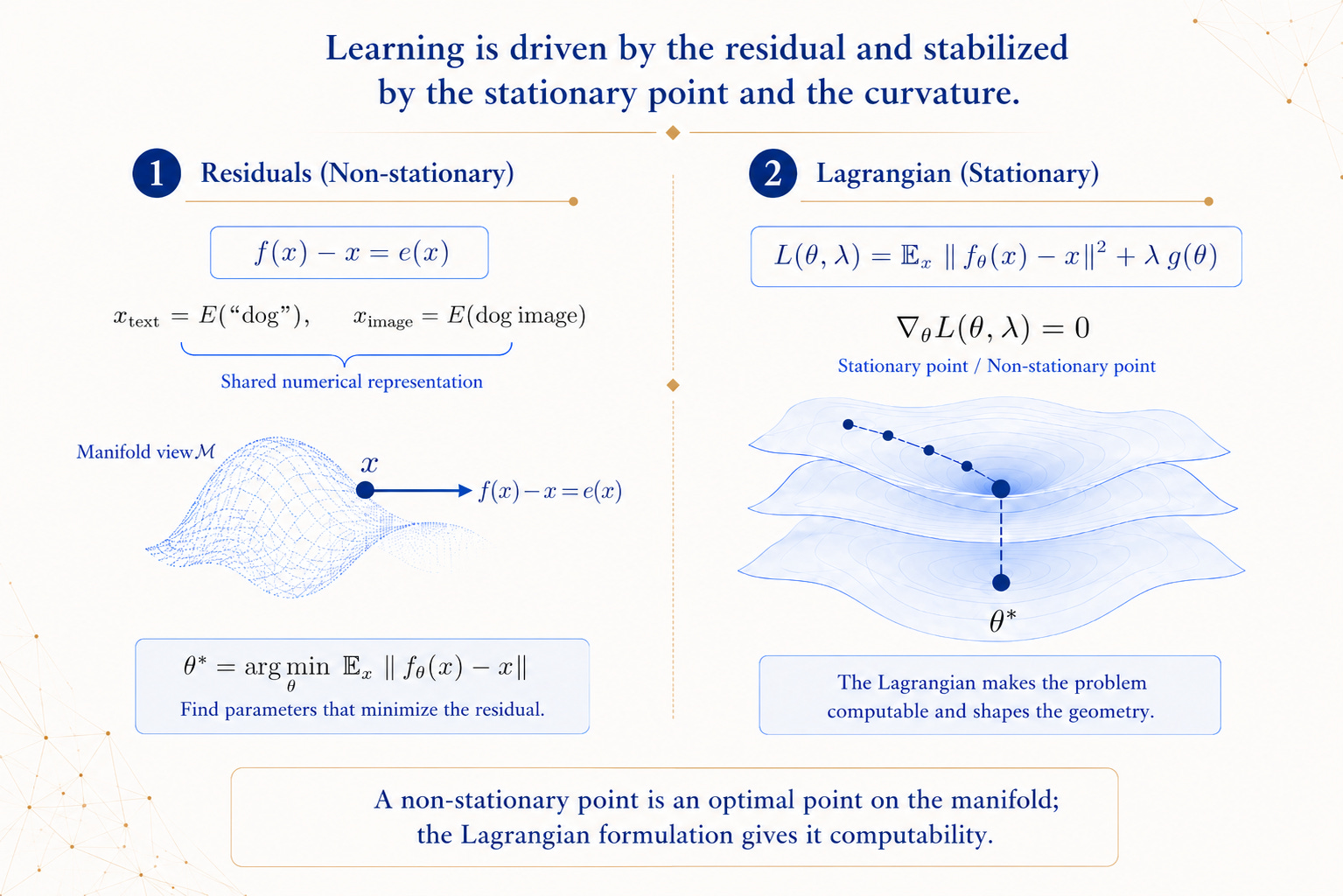
Neural Network Equation: At the global level, learning is described by a fixed-point residual, while the Lagrangian formulation makes the search for a solution computationally possible under loss and constraints. The residual measures how far the network is from a self-consistent solution.
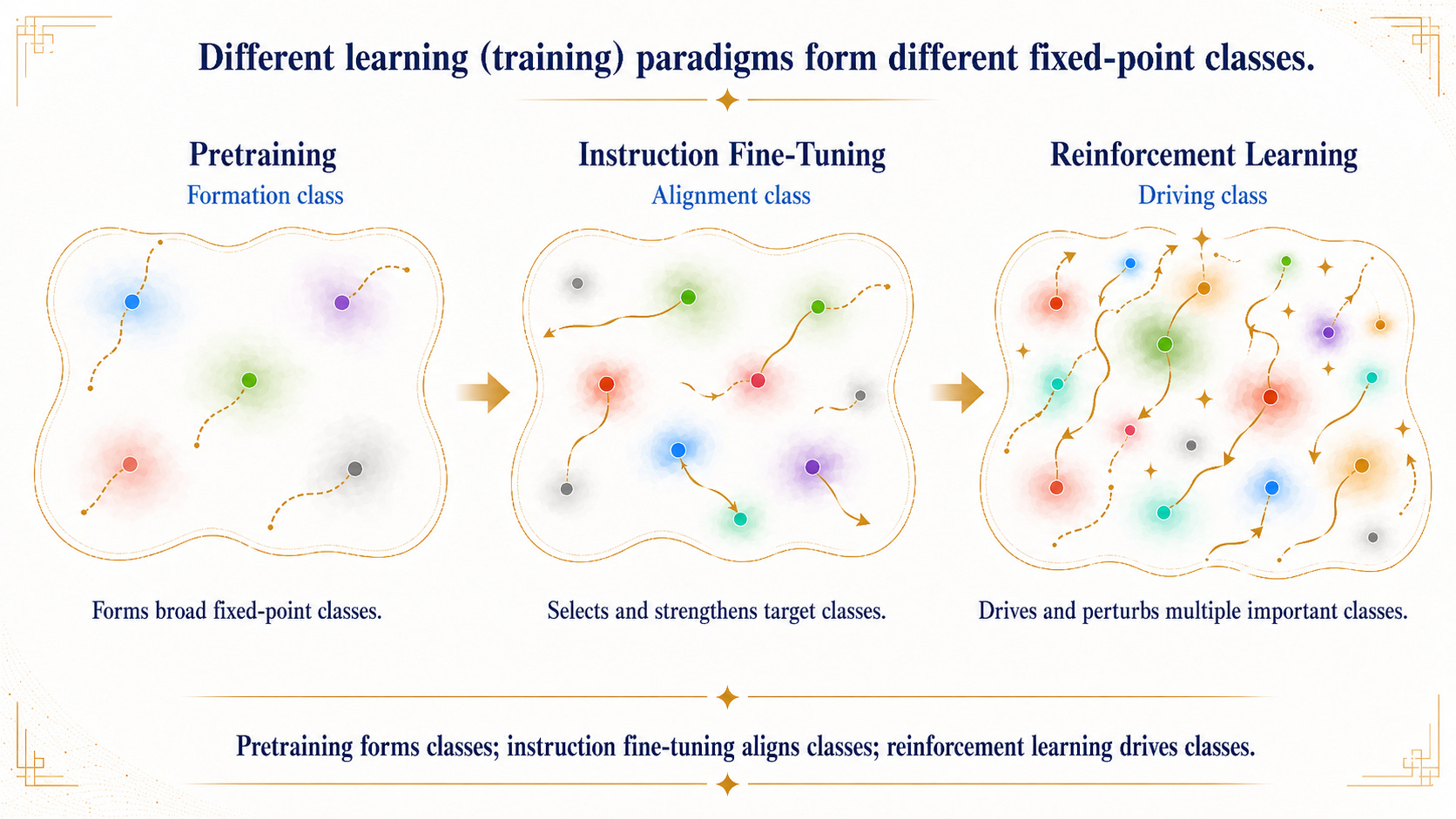
Training Dynamics: Different forms of training—pretraining, instruction fine-tuning, and reinforcement learning—shape different fixed-point classes and different pathways of convergence.
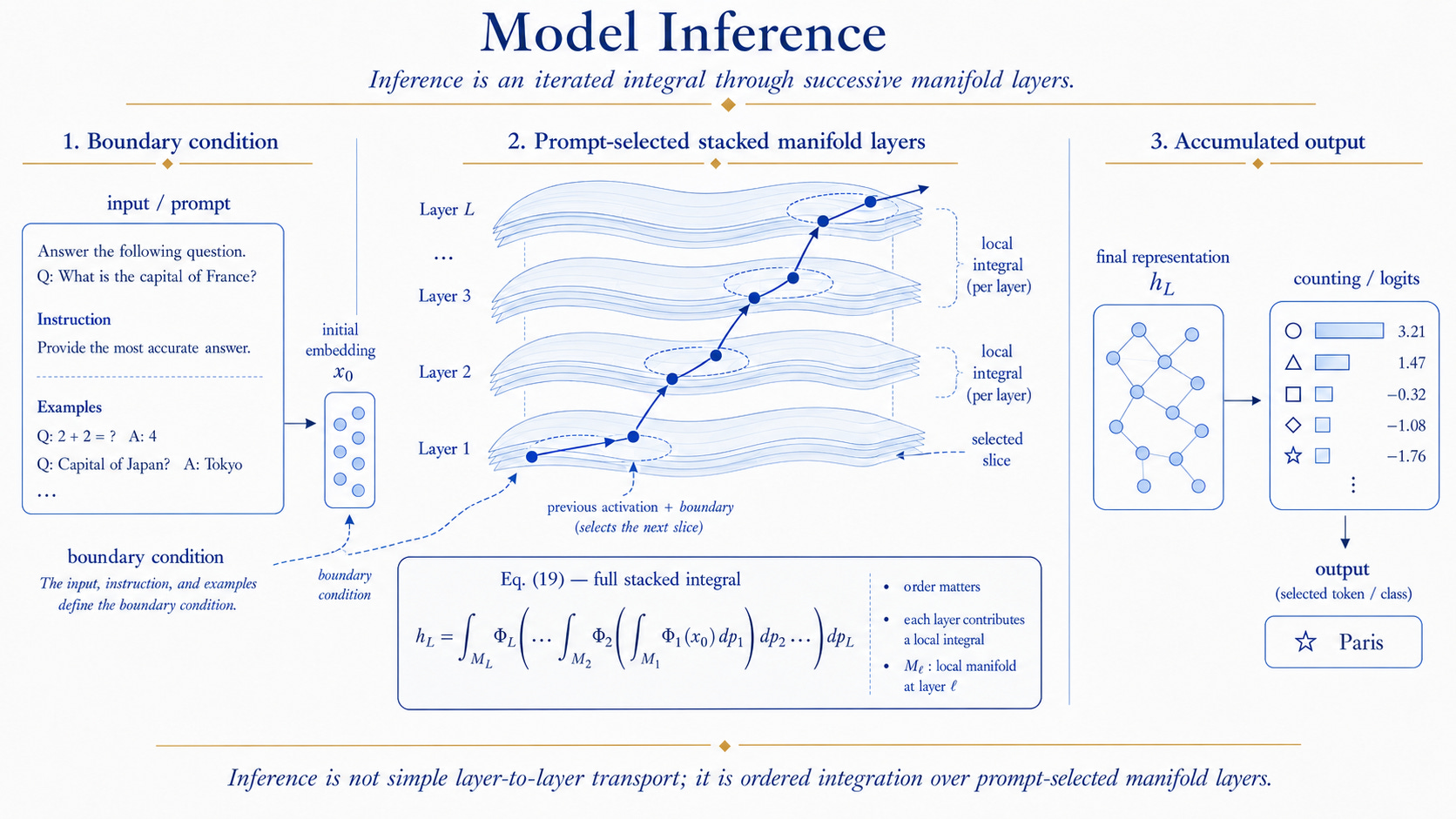
Model Inference: Inference is an iterated integral through successive manifold layers. Each layer contributes a transformation that accumulates into the final output under the boundary condition set by the input.
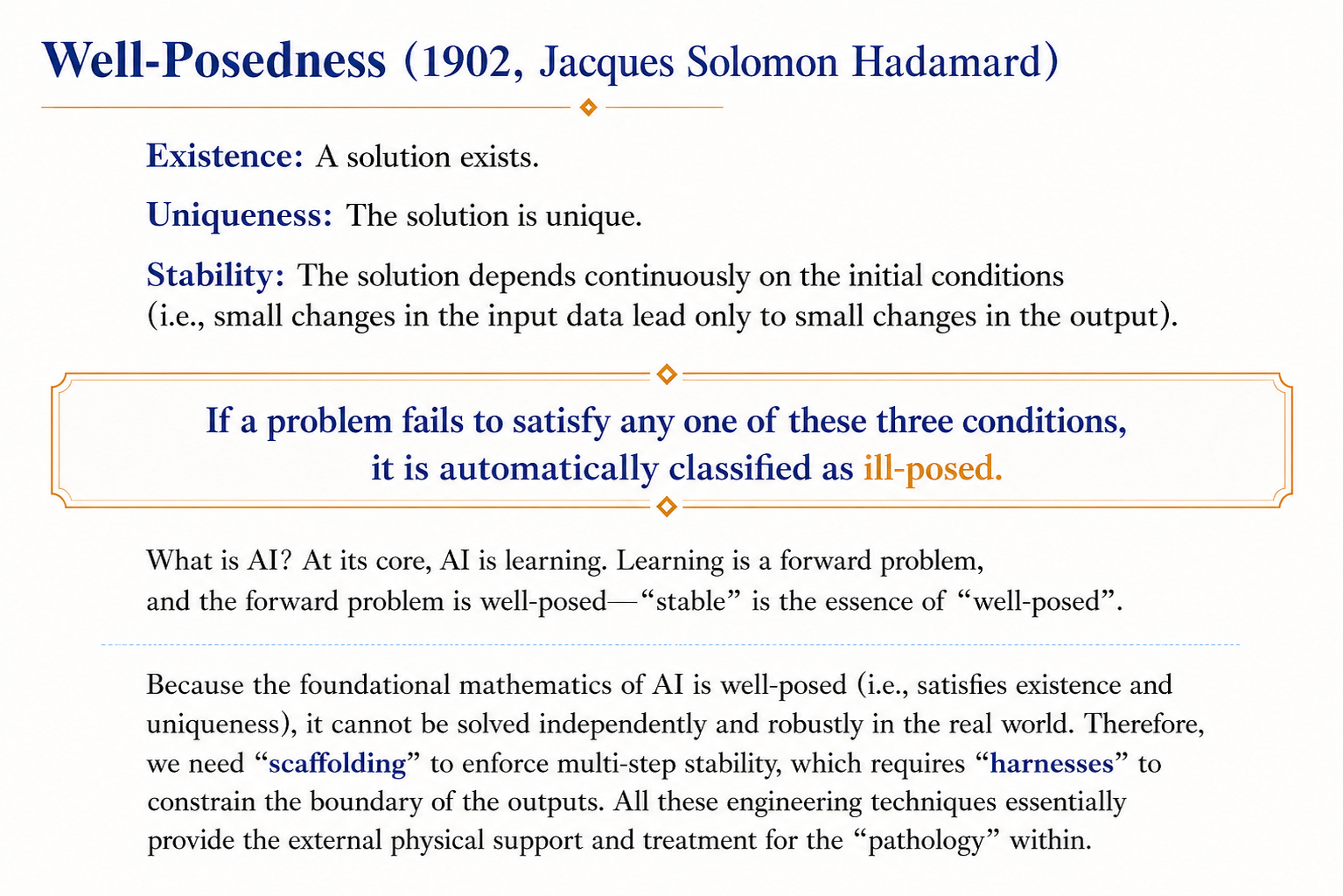
Learning Is an Inverse Problem: Learning is an inverse problem. The internal computational structure is not given in advance. It is reconstructed from data via training. The inverse problem is inherently ill-posed. It produces jagged behavior. It forms the geometry and computational pathways through which neural networks learn and compute.
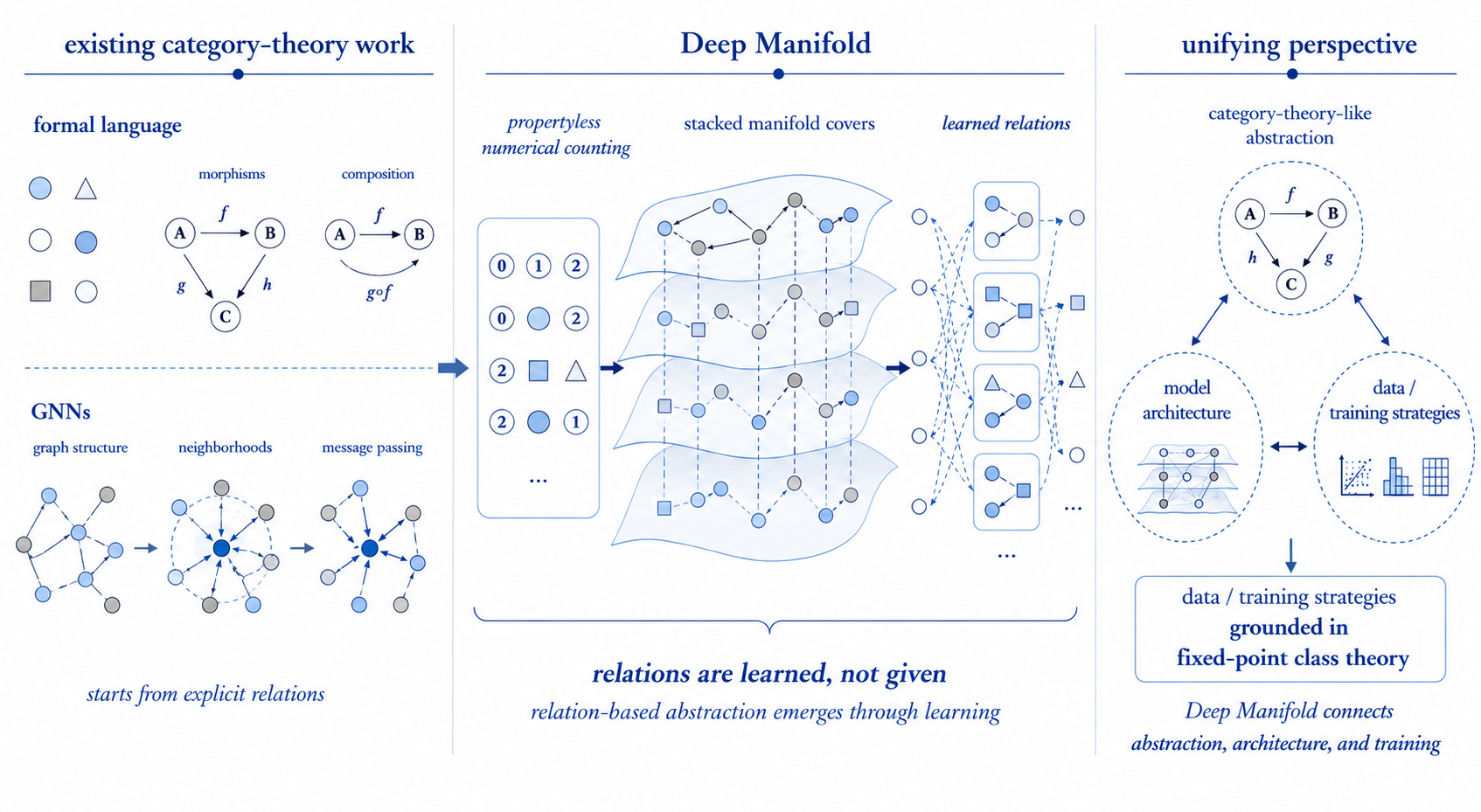
Category Theory Connection: Category theory begins with relationships between objects rather than isolated objects themselves. The neural network does not primarily learn the intrinsic properties of individual data points, but the relationships among data and how those relationships are preserved, reorganized, and propagated through stacked manifolds and iterative computation.